Scroll down to view the full programme Conference Programme

Please click on the session titles for full details of the presentations

Loading
10:15
  1. Stage 1
    45 mins
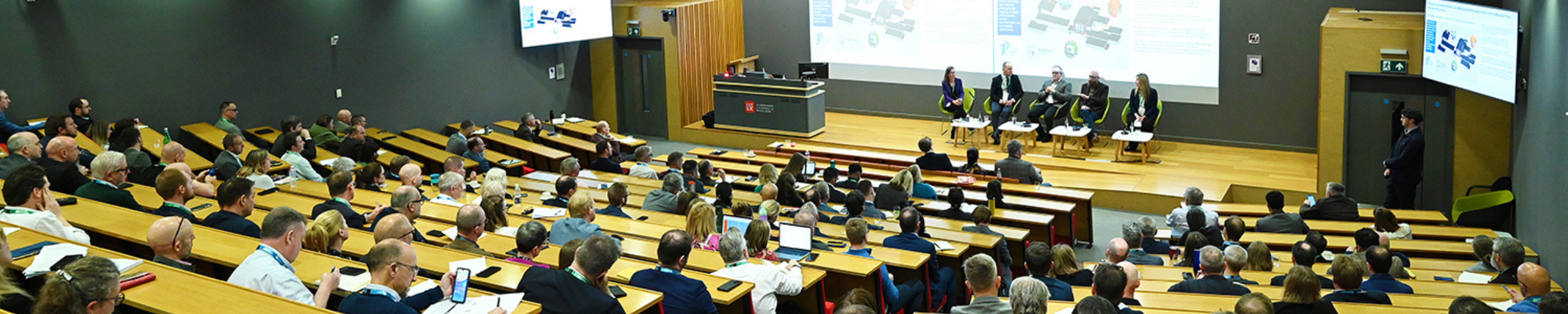
    This panel will bring together representatives from all three appointed delivery partners and the client to share opportunities, challenges, and lessons learned from delivering c.250 solar projects on behalf of GBE and the DfE.
11:45
  1. Stage 1
    60 mins
    Two pioneering higher education projects showcase sustainable design and heritage sensitivity. The University of Plymouth’s Babbage Building retrofit demonstrates deep carbon reduction and adaptable learning spaces, while Oxford’s Castle Bailey Quad achieves Passivhaus efficiency within a historic context.
  2. Stage 2
    60 mins
    Climate resilience is not simply about withstanding physical stressors but also ensuring that the building supports human health and wellbeing. This session will explore how prioritising indoor environmental quality, such as maintaining proper air quality and comfortable thermal, lighting and acoustics conditions is critical in school buildings for the cognitive and physical health of occupants.
  3. Tech Lab
    60 mins
    In this session, James Browning shares how legacy data from the Pathfinder project is being transformed into operational and sustainability outcomes, showing how digital tools create smarter, more impactful learning environments for children.
12:45
  1. 75 mins
14:00
  1. Stage 1
    60 mins

    As the Department for Education (DfE) seeks to address the condition backlog, there is a clear ambition to shift focus from solely new builds to the management of Resilience, Decarbonisation, and the Condition of existing sites and buildings. Opportunities to improve site and building resilience have demonstrated that schools and Responsible Bodies can implement solutions that deliver co-benefits for both children and staff. 

    This session will provide an overview—through case studies and supporting evidence—of projects delivered by Arcadis and the DfE. We will showcase the challenges encountered, how they were overcome, and how multiple benefits can be achieved. The session will also look ahead to future opportunities in this important journey. 

  2. Stage 2
    60 mins
    Decarbonising the UK’s education estate is vital, but progress is held back by funding gaps, investment risk, and balance sheet constraints. In this essential 2026 update, Roli Martin, Managing Director of Global City Futures, presents the latest funding models and financial mechanisms enabling net zero delivery across the sector.
  3. Tech Lab
    60 mins

    This session explores the key asset management challenges facing the education sector and how a structured, best-practice approach can drive lasting improvement. 

    Michael Smith, Technical Director, AECOM will outline practical ways to assess and strengthen existing asset management arrangements, showing how better asset management supports day-to-day operations and net zero carbon ambitions. The session will also share transferable lessons from other sectors that can be successfully applied to education estates.

15:30
  1. Stage 1
    60 mins
    A panel discussion bringing together experts in project management, ecology, carbon management, landscape architecture, architecture, the client (DfE), and contractors to explore how nature-based solutions can drive decarbonisation and climate resilience in schools.
  2. Stage 2
    60 mins
    Speakers will explore how educational estates can transition toward Net Zero Carbon through strategic refurbishment, targeted interventions, and long-term planning. The Holy Trinity School case study will demonstrate a project-level, embodied-carbon-led approach, while the Birmingham Metropolitan College (BMET) case study illustrates how to embed net zero within a college-wide estate strategy.
16:35
  1. Stage 1
    35 mins

    What more needs to be done to raise ambition and respond at pace to the scale of the climate challenge? The panel will explore how the education sector can accelerate progress to create settings that are more climate resilient, greener, and better prepared for future pressures, from extreme weather impacts to the urgent need for smarter, lower-carbon estates.

    Placing the youth voice at the heart of the conversation, the session will reflect on key themes that have emerged throughout the day, actively involve the audience, and challenge everyone in the room to consider where responsibility lies, and what commitments and actions are needed next to deliver meaningful, lasting change.

17:15
  1. 0 mins

Education Estates® Sustainability Conference Partners 2026

AECOM Arcadis Barker


Building Spatial Intelligence


Eddisons Good Energy
  Mace