
The Education Estates® Conference Programme

Join the national conversation around the education estate!

The CPD-accredited conference at Education Estates® covers areas including funding, design, construction, management and maintenance of schools, colleges and universities.

Two days of insight, ideas and connection. The Education Estates® 2026 conference brings together the people responsible for funding, designing, building and managing the places where learning happens, from schools and colleges to universities. Explore the programme below and start planning your visit.

You can view the programmes for our two co-located conferences here: EdTechUK and the European Universities Estate Congress.
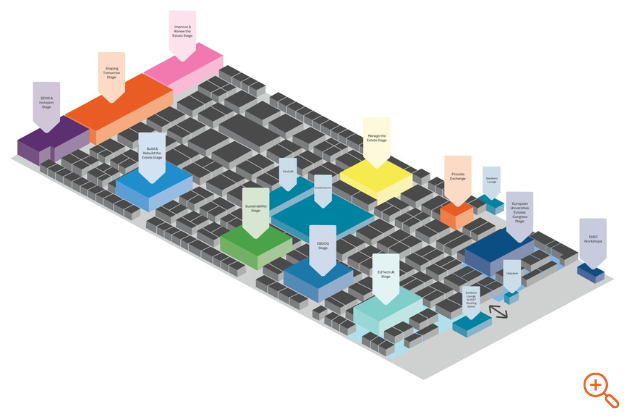



The Education Estates® programme is organised across a series of themed stages, each dedicated to a different part of the education estate conversation. From sustainability and net zero to digital infrastructure, inclusive design, funding and estate management, every stage brings together practical case studies, expert panels and live discussion on the issues shaping schools, colleges and universities today.

Use the map to see how the stages are laid out, then explore the sessions on each one to start building your itinerary for the two days.



Education Estates® Stages

See what you could learn...

Loading
08:45
  1. 75 mins
10:30
  1. Shaping Tomorrow Stage
    30 mins

    How are you empowering all learners today and preparing them to thrive tomorrow? Learning spaces and working environments are changing. As technology changes too, our students have increasing opportunities to succeed. Join Apple to explore these opportunities and the skills that employers are looking for, including creative problem-solving, analytical design thinking, and collaboration.

11:00
  1. 60 mins
11:15
  1. 30 mins

    EduFringe sessions running from 11:15-11:45.

    See what's on

  2. Career Conversations Stand
    30 mins

    With an introduction to networking and how to do it, join Common Ground for 30 minutes of fast-paced, informal networking with senior professionals from across the property and built environment sectors. A brilliant opportunity to make new connections, discover career pathways and practice your networking in a safe environment.


     

    Sponsored by:
    Common Ground
12:00
  1. Shaping Tomorrow Stage
    60 mins

    The Education Estates Strategy is a long-term strategy, backed by a 10-year plan to create schools and colleges that are safe, suitable, sustainable and sufficiently sized. This session will demonstrate how that plan is now being delivered through the strategy's three pillars: managing the estate, improving and renewing the estate, and building and rebuilding the estate.

    Senior leaders from the Department for Education will explore progress across the strategy's three pillars: enabling Responsible Bodies to proactively and efficiently manage and maintain their estates; improving the condition and resilience of the estate through long-term strategic maintenance and renewal; and delivering high-quality building and rebuilding projects where they are needed. Delegates will gain a clearer understanding of what is live now, what is being delivered, and what the strategy means for them.

  2. SEND & Inclusion Stage
    60 mins

    This session brings together two innovative approaches to delivering inclusive education through the design of specialist and mainstream school environments. Exploring Princes Primary SEN School in Liverpool and Fairwater Community Campus in Wales, speakers will share lessons on co-locating schools, integrating specialist provision, and creating flexible, accessible learning environments. The sessions will explore how various stakeholders can be brought together with successful design deriving from collaboration.

  3. Manage the Estate Stage
    60 mins
    As more education estates approach the end of their Private Finance Initiative (PFI) contracts, organisations are increasingly focused on ensuring successful handback outcomes and protecting long-term value. This session brings together legal, operational and real-world perspectives on managing PFI expiry, drawing on both strategic contract management expertise and practical experience. 
  4. Sustainability Stage
    60 mins

    This session will explore how school landscapes can be designed to better support inclusion, wellbeing and equitable
    educational experiences, including how outdoor spaces are used by girls. Speakers will examine how traditional approaches to school grounds can unintentionally exclude or marginalise some students and explore how outdoor spaces can support a wider range of activities, social interactions and learning experiences that ultimately benefit everyone who uses them.

  5. Build & Rebuild the Estate Stage
    60 mins
    The Department for Education's SRP programme is transforming the design and delivery of school buildings across England. Through a suite of nationally developed design standards, technical guidance and pattern book solutions, S25 provides a consistent, evidence-based approach to creating high-quality, sustainable and inclusive learning environments. Aligned with the Education Estates Strategy's vision for a decade of national renewal, the programme helps ensure that school estates are adaptable, resilient and cost-effective, while supporting educational outcomes and community engagement. By standardising excellence, S25 enables faster delivery of better schools for future generations.
  6. Improve & Renew the Estate Stage
    60 mins

    This session explores how existing buildings can be reimagined to create inspiring learning environments while delivering wider social, economic and environmental value. Through two contrasting case studies — transforming part of a Grade I listed university building into future-ready computer laboratories and converting a vacant department store into a creative and digital education hub—the session will examine how heritage assets and redundant retail spaces can become catalysts for renewal.

    A chaired discussion will then consider how education providers can unlock overlooked assets, reduce environmental impact and place learning at the heart of communities, town centres and regeneration strategies.


  7. Fireside Exchange
    60 mins

    This session will explore how Education estates face increasing pressure to deliver more space, improve sustainability, and minimise disruption to teaching. It will explain how modular construction is helping education estates meet these challenges whilst creating high-quality environments for learners and staff. It will also explore how modular construction is supporting faster delivery, greater flexibility and more sustainable learning environments. And finally, how education providers can create better learning spaces whilst managing budget, time and sustainability pressures. It will be an open discussion on the opportunities, challenges and future of modular construction in education estates.

  8. EdTech UK Stage
    60 mins
    Join a conversation centred around far-reaching digital strategies and how to achieve technological excellence across a range of school sites. This fireside chat will see a panel of Educational Leaders answering questions and sharing their device ecosystem experiences. 

    We’ll explore how central teams manage large estates of devices across multiple sites and how digital strategies can be replicated and differentiated for new schools. The conversation will also delve into the nuances of providing a consistent technological experience in schools that vary in size, age, geography, and flexibility. Finally, we’ll speak about the infrastructure considerations that can be implemented at the planning stage of a new build. 
13:00
  1. 60 mins
13:15
  1. 30 mins

    EduFringe sessions running from 13:15-13:45.

    See what's on

  2. Career Conversations Stand
    30 mins

    Design Engineer Construct! (“DEC”) was born from Building Schools for the Future, connecting young people with the professionals designing and delivering their own schools. Seventeen years later, the challenge of building the future workforce remains just as urgent.

    Free lunch provided to those registered under the Future Leaders Programme, provided by Arcadis

    Sponsored by:
    Class of your Own       Arcadis
14:00
  1. Shaping Tomorrow Stage
    60 mins

    The session will bring together national and local perspectives on creating inclusive education estates. It will explain how inclusion is supported through the practical inclusive education estates and inclusion base guidance published earlier this year.

    Examples from live and completed schemes will illustrate the use of High Needs Capital Funding, alongside affordable approaches that can improve accessibility and inclusion without major capital works.

    Bringing the end-user perspective to the discussion, local authority speakers will reflect on what has worked in practice, and how collaboration can support better learning environments and improved experiences for pupils, staff, families and the wider school community.

  2. SEND & Inclusion Stage
    60 mins
    Speakers in this session will examine the practical implications of emerging policy, capital investment and estate planning, alongside the growing role of trauma-informed and neurodiversity-aware design in promoting wellbeing, safety and belonging. Through policy insight and design-led case studies, the session will consider how inclusion bases, sensory-informed spaces and wider estate improvements can be integrated within mainstream settings to support equitable outcomes for all learners.
  3. Manage the Estate Stage
    60 mins

    Against the backdrop of the Education Estates Strategy launched earlier this year, Lindsay Harris will be talking about the School Estate Management Standards (SEMS) Return for the 2026–2027 academic year. The session will also consider the experiences of Academy Trusts on the SEMS Return process, as well as how it aligns with Estate Management at Trust level. There will also be consideration of how the SEMS Return will help set a baseline for future delivery of the strategy across the education estate, supporting the shift towards more proactive, data-led estate management and the longer-term ambition for an estate that is safe, suitable, sustainable and sufficiently sized.

    The discussion will explore how stronger estate data and planning can help Responsible Bodies prioritise investment, improve resilience and condition, and make better use of their estates to support education and communities.

  4. Sustainability Stage
    60 mins

    This session will feature presentations from the Department for Education Sustainability Award finalists:

    • Offley Primary Academy, Sandbach
    • Prospect House Specialist Support Primary School, Manchester
    • The Levett School, Doncaster
    • Trinity School, Belvedere, Bexley
    • Queensmead Primary Academy, Leicester
  5. Build & Rebuild the Estate Stage
    60 mins
    This session explores how ambitious sustainability goals can reshape the way education buildings are designed, delivered and experienced, challenging the reliance on complex mechanical systems and demonstrating the potential of low-energy, Passivhaus-informed approaches at scale. Drawing on research-led thinking and large-scale delivery experience, including the NowtHaus
     research study and the University of Manchester’s landmark Fallowfield Passivhaus student residential development, speakers will examine how intelligent architectural design, thermal comfort modelling and performance-led decision-making can reduce operational energy demand while improving occupant wellbeing and building resilience.  
  6. Improve & Renew the Estate Stage
    60 mins
    This session explores how school and college estate renewal projects can successfully deliver sustainable, future-ready learning environments while operating within the constraints of live educational settings, ageing buildings and complex campus conditions. Through the case studies St Mary Magdalene & St Stephen’s CE Primary School and Greenhead College, speakers will demonstrate how some of the sector’s most pressing estate challenges, from RAAC remediation to the replacement of Laingspan structures, can become opportunities for long-term transformation.  Drawing on lessons from both projects, the session will provide a concise overview of how stakeholders have navigated the challenges of rebuilding, retrofit and inter-campus remodelling.
  7. EdTech UK Stage
    60 mins

    Technology is now a routine part of how schools are designed, built and operated. Its role has evolved significantly over time, helping to improve connectivity, resilience and the information available to support better management of the education estate.

    This session will look back on the evolution of technology across the education estate, from embedding technology in new school buildings, through programmes that have improved connectivity for schools across England, to the growing interest in how technology can support building performance, resilience and sustainability.

    The session will share what schools have told us about the impact of connectivity and how their experiences are helping to shape future thinking about resilient digital infrastructure and technology-enabled schools. It will also explore emerging opportunities in areas such as smart sensors, environmental monitoring and energy optimisation, and how learning from these developments may help inform future approaches to the education estate.

15:00
  1. 60 mins
15:15
  1. 30 mins

    EduFringe sessions running from 15:15-15:45.

    See what's on

  2. Career Conversations Stand
    30 mins

    Join Construction for Women for an informal introduction to the Emerging Leaders programme and discover how it is supporting women during the first five years of their careers across construction and the wider built environment.


    Sponsored by:
    Construction for Women
16:00
  1. Shaping Tomorrow Stage
    60 mins
    This session explores how the Department for Education’s Education Estates Strategy is reshaping expectations for estate management across schools and trusts, moving organisations from a culture of “should do” to one of clear operational and governance accountability. Speakers will examine how new requirements translate into practical responsibilities for Trust Boards, executive leaders and estates professionals.
  2. SEND & Inclusion Stage
    60 mins
    Bringing together perspectives from schools, FE colleges and design professionals, speakers will examine how policy, capital investment and estate strategy are shaping more adaptable, neurodiversity-affirming learning environments. Through case studies including specialist SEND provision, inclusive FE campuses and sensory-informed design approaches, the session will highlight how buildings, landscapes and operational planning can work together to improve wellbeing, independence and learner outcomes.
  3. Manage the Estate Stage
    60 mins
    As the sector moves towards greater standardisation and data-driven decision-making, speakers will examine how organisations can build stronger estate intelligence, improve governance and align local priorities with national expectations. Through live case studies from both school trusts and higher education institutions, the session will demonstrate how complex estate data can be made more accessible, enabling stakeholders to make more informed decisions about investment, sustainability, space utilisation and long-term strategic planning.
  4. Sustainability Stage
    60 mins
    This session explores how education estates can deliver safer, lower-carbon and more environmentally responsible buildings by rethinking both the materials used and the way their wider impacts are evaluated. Through research-led guidance on timber-framed schools and case studies of high-performance construction projects, speakers will examine how sustainability, fire safety, embodied carbon and material sourcing can be addressed together rather than in isolation. 
  5. Build & Rebuild the Estate Stage
    60 mins

    This session will feature presentations from the Education Estates® 2025 Project of the Year Winners

    • Inclusive Design - Lisburne SEND School - AtkinsRéalis
    • State School - Prestley Wood Academy - AtkinsRéalis
    • Independent School - Lower School Library, Dulwich College - alma-nac
    • Colleges - Industry Hub, Burnley College - Burnley College & ABW Architects
    • International - River Grove Elementary School - Arcadis
  6. Improve & Renew the Estate Stage
    60 mins
    Before children can learn, they need to feel safe. This session explores how school landscapes can actively support emotional regulation, wellbeing and readiness to engage. Moving beyond the idea of playgrounds as leftover space, it reframes external environments as essential infrastructure for calm, belonging and focus. Drawing on trauma-informed design principles and the idea of school as a place that should feel like home, the talk demonstrates how planting, enclosure, materiality and choice create environments that reduce stress and support every pupil, because regulation is the foundation that makes learning possible.
  7. Fireside Exchange
    60 mins
    Access to research, talent, specialist infrastructure and opportunities for collaboration are among the key reasons science and technology companies cluster in regional hotspots across the UK. This panel will explore how existing estates can be reimagined as sector linked science and technology clusters, and how partnerships with specialist developers can help unlock their full potential. Join our expert panel as they discuss the essential ingredients of a successful innovation campus, driven by education estates, drawing on practical experience and insight from across the sector.
  8. EdTech UK Stage
    60 mins
    What if your school or campus could tell you where energy is being wasted, how spaces are actually being used, and what students and staff need to thrive? This session explores the transformative potential of smart buildings technology in educational environments. Discover how IoT sensors, automation, and real-data analytics can be harnessed to optimize operational efficiency and slash running costs, while simultaneously creating healthier, more responsive, and engaging learning spaces that elevate the everyday experience for students and staff alike.
17:00
  1. 45 mins
18:00
  1. 0 mins
09:00
  1. 45 mins
09:45
  1. Shaping Tomorrow Stage
    60 mins

    What can education learn from the people running some of the UK's largest public estates? Chaired by Mel Manku (Arcadis), this opening keynote brings together Sarah-Jayne Pizzie (Ministry of Justice), Saurabh Bhandari (Office of Government Property) and Mike Green (Defence Infrastructure Organisation) to share how their sectors approach social infrastructure, investment, technology and long-term estate planning, and how to make projects investable through the outcomes they deliver.

10:45
  1. 45 mins
10:50
  1. 30 mins

    EduFringe sessions running from 10:50-11:20.

    See what's on

  2. Career Conversations Stand
    30 mins

    Reds10 has been a valued partner of The Talent Foundry, supporting young people through both our education programmes and participation in three of our cycling challenges. Through the new Reds10 Academy, launched in 2025, we are working together to inspire the next generation of construction professionals. Focused on students at Driffield School and Sixth Form, the programme provides hands-on experiences, industry insight and tailored support to raise aspirations, build confidence and encourage uptake of the new Construction T-Level launching in September 2027. We will speak with Reds10 about the partnership, its ambitions and the impact it hopes to achieve.

    Sponsored by:
    The Talent Foundry
11:30
  1. Shaping Tomorrow Stage
    45 mins

    The new Renewal and Retrofit Programme aims to improve the condition of school and college buildings and increase resilience to climate change so buildings can last for decades to come and are net zero ready. 

    Join us to explore the programme development and what we plan to achieve over the planned phases of delivery - from launch this year and into the future.   

  2. SEND & Inclusion Stage
    45 mins
    Emotionally‑Based School Avoidance (EBSA) is a rapidly growing challenge, prompting the development of the facilities at Prince William School. This session shares the project’s journey—from the initial need and design principles to the operational realities of placing specialist provision within a mainstream site. The speakers will present insights from students, staff, and the trust, highlighting the benefits of supported transitions, community integration, and repurposing an existing building. The session offers practical lessons for design teams and clients seeking to create effective, inclusive environments that improve engagement and outcomes for EBSA learners.
  3. Manage the Estate Stage
    45 mins
    Healthy learning environments directly influence educational outcomes. As part of the Great British Energy Solar Partnership programme, 32 schools are participating in what's believed to be the largest DfE indoor air quality monitoring trial across the UK education estate. Continuous monitoring of CO₂, temperature, humidity and occupancy is revealing how classrooms truly perform. This session explores what this means for pupil performance, operational efficiency and national reform, showing how structured environmental data strengthens governance, informs investment and supports a more performance-led education estate.
  4. Sustainability Stage
    45 mins
    This session explores how colleges can combine digital innovation with sustainable refurbishment to extend the life and performance of existing estate assets. Using a live case study from Barnsley College, speakers will examine the process of identifying opportunities for the Institute of Technology within a historic 1930s building located in a conservation area.
  5. Build & Rebuild the Estate Stage
    45 mins
    This session explores the long-term impact of university buildings through the lens of post-occupancy evaluation and heritage retrofit. Using Southampton Solent University's The Spark and Sheffield's Arts Tower as case studies, speakers will demonstrate how both new-build and refurbishment projects can enhance the student experience, improve sustainability, and create resilient, future-ready learning environments.
  6. Improve & Renew the Estate Stage
    45 mins

    Great British Energy Local enables public bodies to turn clean energy ambition into practical delivery. Drawing on lessons from the GB Energy Solar Partnerships Programme and our ambition to support over 1,000 local and community energy projects by 2030, this session will explore how schools, hospitals, councils and other public sector organisations can use clean energy, storage and smart technologies to build more resilient, efficient estates. We'll discuss how scalable delivery models can reduce energy costs, support frontline services and unlock greater value from public assets for the communities they serve.

  7. Fireside Exchange
    45 mins

    Demographic change is creating a very different set of pressures for trusts, local authorities and education leaders. In some places mainstream capacity may become surplus, while demand for SEND, alternative provision and more inclusive environments continues to grow.

    The discussion will explore the choices education leaders will increasingly need to make:

    • Where are the biggest estate capacity pinch-points likely to emerge over the next decade?
    • Where might current models of estate planning, funding and implementation fall short?
    • When capacity becomes surplus, how should trusts and local authorities decide whether to shrink, consolidate, repurpose or invest?
    • What would it take to successfully adapt existing space for SEND, AP, early years or community use?
    • How do we create an estate capable of expanding, contracting and changing use as needs evolve?
  8. EdTech UK Stage
    45 mins
    Through the use of mobile devices, teaching and learning is no longer confined to the classroom. Spaces can become multimedia hubs, full of exciting opportunities and experiences that were once inaccessible. 

    This interactive and engaging workshop will showcase innovative approaches to pedagogy and lesson planning via Augmented Reality, Multimedia Tools and Assistive Tech. Our aim is to reinvent classrooms and flip learning for a more enriched educational experience whilst enabling schools to maximise the spaces they have available to them. The workshop will also demonstrate how technology can make learning more accessible and provide digital resources that would not be physically practical to provide to every learner.
12:15
  1. 75 mins
12:45
  1. 30 mins

    EduFringe sessions running from 12:45-13:15.

    See what's on

  2. Career Conversations Stand
    30 mins

    Building Better Minds brings together young people, employers and industry role models to explore the challenges of navigating recruitment, managing anxiety and building resilience. We'll discuss practical coping strategies, the importance of mentoring and how employers can make recruitment more inclusive, lead with empathy and create supportive workplace cultures.

    We will also be running a "Discover your unseen career" activity on our stand and will be joined by various mentors to network with students and offer careers advice.

    Free lunch provided to those registered under the Future Leaders Programme, provided by Morgan Sindall Construction

    Sponsored by:

    Constructive Futures      Morgan Sindall Construction

13:30
  1. Shaping Tomorrow Stage
    45 mins
    This session will feature insights into how CF25 technical objectives can be translated into deliverable design solutions and lessons learned from real CF21 projects that directly inform CF25 decision-making.
  2. SEND & Inclusion Stage
    45 mins
    Alternative Provision is not known for attractive buildings, but now serves a record number of pupils and is earmarked for significant investment. Led by an inspirational headteacher and including the pupil voice, this presentation explains the goals of Alternative Provision, explains how the brief for this new site evolved and how the design team created a fresh approach to building layout and detailing. For those writing a brief for, or designing, an Alternative Provision environment, this talk provides background theory, lessons learnt, and practical and original tips for an aspirational approach that goes above and beyond the baseline.
  3. Manage the Estate Stage
    45 mins
    Using live school case studies including Woodham Academy and Dunfermline Learning Campus, speakers will demonstrate how digital twin platforms can integrate operational, asset and performance data to provide facilities and estates teams with real-time insight into building performance.
  4. Sustainability Stage
    45 mins
    This session explores how schools and education estates can move from climate adaptation strategies to practical, on-the-ground implementation, ensuring learning environments remain safe, resilient and operational in the face of increasing climate risks such as overheating, flooding and water scarcity.
  5. Build & Rebuild the Estate Stage
    60 mins
    Nurseries are at the heart of a vibrant community and vital for children and their families. This session will explore how we are achieving safe, sustainable and inclusive environments for our youngest learners.
  6. Improve & Renew the Estate Stage
    45 mins
    Drawing on case studies from higher education and specialist research facilities, speakers will examine the practical realities of working within constrained and occupied environments, balancing decarbonisation ambitions with cost, compliance and technical challenges. The session will highlight approaches to feasibility testing, infrastructure planning, embodied carbon reduction and phased delivery, demonstrating how targeted interventions can extend asset life, improve performance and futureproof ageing estates while minimising disruption and environmental impact.
  7. Fireside Exchange
    45 mins
    Warneford Consulting invite interested parties to their open fireside chat to discuss the new Education Estates Strategy and how best to prepare to meet the standards and achieve Level 3
  8. EdTech UK Stage
    45 mins
    This session examines the communication challenges schools face during both emergency situations and everyday operations. It explores the role of integrated mass notification systems in supporting lockdown procedures, improving the delivery of critical information, and enabling clear, consistent communication across the school throughout the day.
14:15
  1. 30 mins
  2. 30 mins

    EduFringe sessions running from 14:15-14:45.

    See what's on

14:45
  1. Shaping Tomorrow Stage
    45 mins
    This session explores how highly specialist educational and residential environments can be designed to support safety, wellbeing and positive outcomes for vulnerable young people, while balancing complex operational, safeguarding and therapeutic requirements.
  2. SEND & Inclusion Stage
    45 mins
    How much can we learn by auditing each other’s buildings—and inviting critique of our own? Focusing on inclusive design for disability and neurodiversity, we will review a number of our counterpart's projects including education and healthcare. Using the principles of inclusive design, we will test how our buildings perform in practice and in detail. Through peer visits, user workshops and post-occupancy evaluation, we will reflect on what worked, what didn’t, and how we can continue learning to design more inclusively.
  3. Manage the Estate Stage
    45 mins
    This session explores how artificial intelligence, digital technologies and data-driven approaches are transforming both the management and delivery of education estates. Attendees will gain practical insights into how intelligent technologies can support more efficient operations, better-performing buildings and greater confidence in estate investment and delivery.
  4. Sustainability Stage
    45 mins

    As schools transition towards low-carbon heating, hybrid boiler and heat pump systems are emerging as a practical solution that balances decarbonisation ambitions with operational resilience. This session draws on real-world experience from the design, procurement and delivery of education-sector projects, including the development of approaches that have informed the DfE's CF25 requirements. Attendees will gain insight into key technical considerations, contractor and supply-chain perspectives, and the funding constraints that continue to shape refurbishment programmes. The presentation concludes with practical recommendations for improving project outcomes and accelerating heat decarbonisation across the education estate.

  5. Build & Rebuild the Estate Stage
    45 mins

    This session will provide an overview of the department's Research and Development (R&D) programme, setting out the context of our estate and the key issues and challenges that are driving our work. Attendees will gain insight into the questions we are seeking to answer and the evidence-based approach being taken to support future decision-making.

    The session will showcase achievements to date, highlighting how research findings have influenced school building specifications and delivered tangible benefits for schools. It will also examine the impact of the programme more broadly, sharing key lessons learned and emerging insights.

    Finally, the session will look ahead to the next phase of the R&D programme, outlining future priorities, opportunities for innovation, and the steps being taken to improve and adapt the education estate for the future.

  6. EdTech UK Stage
    45 mins
    Plymouth CAST partnered with ONE Creative Environments to create a connected digital estate that links condition survey information, asset data, compliance records, maintenance activities and energy performance within a single digital twin environment. This session explores how the Trust is moving from reactive maintenance to proactive, data-driven estate management. Through a real-world case study, delegates will learn how structured information, predictive maintenance, and energy intelligence can improve compliance, reduce operational costs, support sustainability goals and provide better evidence for estate investment decisions across Multi Academy Trust portfolios.
15:40
  1. Shaping Tomorrow Stage
    40 mins

    If we want to create better places for future generations to learn, how do we ensure that future generations also have the opportunity to help shape and deliver them?

16:20
  1. Shaping Tomorrow Stage
    10 mins
16:45
  1. 0 mins

Join the national conversation around the education estate